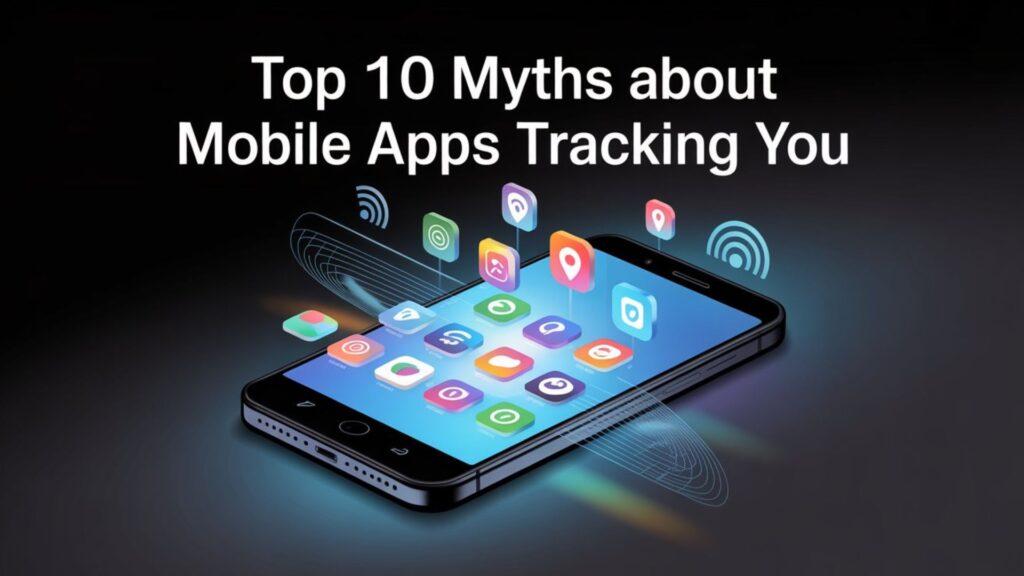
When it comes to mobile apps, there’s a lot of confusion and a ton of rumors floating around about privacy and tracking. In this article, we’re diving into the Top 10 Myths About Mobile Apps Tracking You, breaking down what’s real and what’s completely overblown. From the stuff apps actually do with your data to the things people just assume, we’ll go through each myth and explain why it matters—or why it doesn’t. By the end, you’ll have a much clearer idea of how mobile apps interact with your information and which fears are just myths.
Myth #1. Do We Even Need Mobile Apps Anymore?
Yeah, so people still ask this. Honestly, it’s 2026 and if your business doesn’t have a mobile app, you’re behind. That’s not an opinion, that’s just… reality.

Why? Because people live on their phones. Like, their entire life is in there. Banking, shopping, chatting, scrolling, you name it. If you’re trying to reach your audience and your app isn’t mobile-first, you’re basically waving at them through a glass wall.
Startups get it. Big businesses get it. Everyone is trying to be “mobile-first” because it actually works. Push notifications, loyalty programs, personalized deals—all that stuff? Works way better on an app than on a website.
Mobile apps aren’t a fad, not even close. They’re the real deal if you want people to interact with your business properly.
Myth #2. Install Fraud: Yeah, It’s Real
Here’s something scary but not talked about enough: install fraud. Basically, some people or companies take credit for downloads that never actually happen.
How? A couple ways:
- Shady publishers: They either inflate numbers to look good or literally make fake apps/sites to generate installs and ad revenue.
- Ad networks: Sometimes they’re victims, sometimes they just don’t care, sometimes they’re actively in on it.
Why should you care? Because fake installs screw with your data. If you think you’re getting thousands of new users but half of them are fake… well, your marketing decisions are basically guesses. And that’s expensive.
So yeah, install fraud exists. And it sucks. Keep an eye on your sources.
Also Read: Top 10 Myths About Battery Drain From Apps – 2026
Myth #3. Email Marketing Isn’t Just About Conversions
People think email marketing is “send emails = get sales.” Wrong. Really wrong.

If all your emails are just trying to sell something, users will unsubscribe fast. Like, faster than you think.
Good email marketing is more like… nurturing. You can use it to:
- Keep people engaged daily
- Remind them to leave reviews
- Promote offers, deals, new stuff
- Ask for feedback
Think of it this way: if your emails actually give value, users stick around. And yes, they’ll buy eventually—but only if they don’t feel spammed.
Myth #4. Push Notifications Are Tricky
Push notifications are those little alerts on your phone. Some people think they’re just for conversions. Nope.
They’re more about engagement and retention. And you have, like, a tiny amount of space to say what you need. Too many words? Users ignore it. Too vague? Ignored.
Tools like Firebase, Mixpanel, Kochava let you personalize notifications. Personalization is key—if it feels like the app actually knows the user, they’ll click.
Example: “Your favorite pizza is 20% off today 🍕” beats “Check our deals” every single time.
Myth #5. Getting Featured In The App Store
Some people think there’s no way to describe or promote your app in the store. Totally wrong. You can:
- Write a detailed description
- Add screenshots
- Upload a short preview video
Now, getting featured? That’s another beast. Every app store has its quirks, but common sense things like:
- Frequent updates: Keep your app fresh, update content, fix bugs, whatever. The store likes it.
- UI Design: Clean, intuitive, modern. If your app looks like 2005-era software, forget it.
- Ratings/Reviews: People trust others more than you. If your app is bad, no influencer or ad will help.
Basically, make it look good, update often, and don’t ignore ratings.
Myth #6. ASO Isn’t Magic
App Store Optimization (ASO) sounds like a fix-all, but it isn’t. Some people think “just do ASO = downloads.” Nope.

ASO is like SEO. It helps your app show up higher in searches, but it’s not automatic. You have to:
- Make good icons
- Screenshots that don’t suck
- Promo text that’s not generic
- Videos that actually show what the app does
Also, app quality and reviews matter. Don’t think ASO replaces a crappy app.
Myth #7. Analytics Are Actually Useful
Some devs ignore analytics, thinking it’s optional or boring. Big mistake. Huge.
Analytics tell you what users actually do, what they like, what they hate. Without it, you’re guessing.
You can track:
- Engagement
- Retention
- Bugs
- Crash reports
Combine these, and you can make real, data-driven improvements instead of hoping your gut is right.
Myth #8. Influencers Aren’t A Magic Bullet
Influencer marketing sounds fun—pay someone to plug your app and boom, users. But if your app sucks, it won’t matter.
Yeah, they can help reach a wider audience. But it’s a short-term boost if the product doesn’t hold up. Influencers are not a replacement for quality, engagement, or good UI.
Also Read: Top 10 Myths About Free Apps – 2026
Myth #9. UI & UX Matter More Than You Think
Some people assume, “Our app has one killer feature, the design doesn’t matter.” Wrong. So wrong.

UI is the first thing people see. UX is how they feel using it. If either is bad, people uninstall. Simple.
Good UI/UX = intuitive, attractive, consistent. Bad UI/UX = instant regret for the user. Invest here, it’s worth it.
Myth #10. Customer Feedback Isn’t Optional
People ignore reviews all the time. Don’t. Ever.
Reviews are basically free research. They tell you:
- Bugs
- Features people hate
- Features people love
If you ignore them, your app’s doomed. Listen. Fix stuff. Iterate. Repeat.
Conclusion
So yeah, here’s the deal—apps don’t just succeed on their own. Forget the myths, forget the “quick hacks.” You need good design, real marketing, listening to users, and keeping your app fresh. Do the work, pay attention, and maybe your app won’t just sit there—it might actually get used and loved.
Frequently Asked Questions (FAQs)
Q. Are mobile apps secretly tracking everything I do?
Ans: Not really. Sure, some apps collect data, but most apps track things like app usage, clicks, or preferences to improve functionality or show ads. They’re not spying on you 24/7 like some people imagine.
Q. Can I stop apps from tracking me completely?
Ans: You can limit tracking, but completely stopping it is tricky. Most phones have settings to restrict permissions, disable location tracking, or turn off ad personalization. It’s not perfect, but it reduces how much apps can follow you.
Q. Does uninstalling an app erase all my data?
Ans: Usually, no. Some data stays on the app’s servers even after you uninstall. That’s why reading privacy policies matters and sometimes manually deleting accounts is necessary.
Q. Are free apps more likely to track me than paid apps?
Ans: Not necessarily, but free apps often rely on ad revenue, which sometimes means more tracking for targeted ads. Paid apps might track less, but it’s not a guarantee—they still may collect analytics to improve the app.
Q. Will disabling location services stop apps from tracking me?
Ans: It helps, but apps can still collect other info like device type, IP address, and app usage. Disabling location limits one type of tracking, but it doesn’t stop everything.